

The Slave Trade
- Yamsemaj Notoa
- May 8, 2023
- 7 min read

Updated: May 12, 2023
The Slave. The original labour-saving device.

Delegates of the fifth Pan-African Congress, Manchester, 1945
Photo: Working Class Movement Library
Does the above picture have anything to do with todays topic?
Hell No! -...but is it nice to see some brothers looking dapper?
Hell Yes!~
I decided to begin todays article in this way because talking about slavery is such a vacuum of positivity and collective self-efficacy. Below is the real main picture for this article, as you can see the picture shows ancient engravings of slaves. The purpose of this picture? To evoke in your mind that slavery goes way back! Thousands of years back.

Slave Engravings
Photo: Niall O’Donoghue
According to Oxford Languages, the slave is a person who is forced to work for and obey another and is considered to be their property; and thus, an enslaved person.
The practice of enslavement has been common throughout antiquity in many regions, countries and peoples. The slave was the original labour-saving device. In contemporary times, slavery is mostly seen as shameful, devoid of morality and absent of compassion but unfortunately, the practice persists in modernity, albeit in a far less overt manner due to its illegal nature.
However, in Northern African countries such as Libya and Mauritania, one can still see the gears of slavery turning quite openly with actual slave auctions not being particularly uncommon. This modern slavery can also be witnessed in the First World aswell, where vulnerable migrants are trapped in a cycle of extortion, imprisonment, forced labour and prostitution.
According to Aryn Baker, a writer for Time, this is increasingly apparent in Italy, where migrants are being forced to toil unpaid in the fields picking tomatoes, olives and citrus fruits and trafficked into prostitution rings.
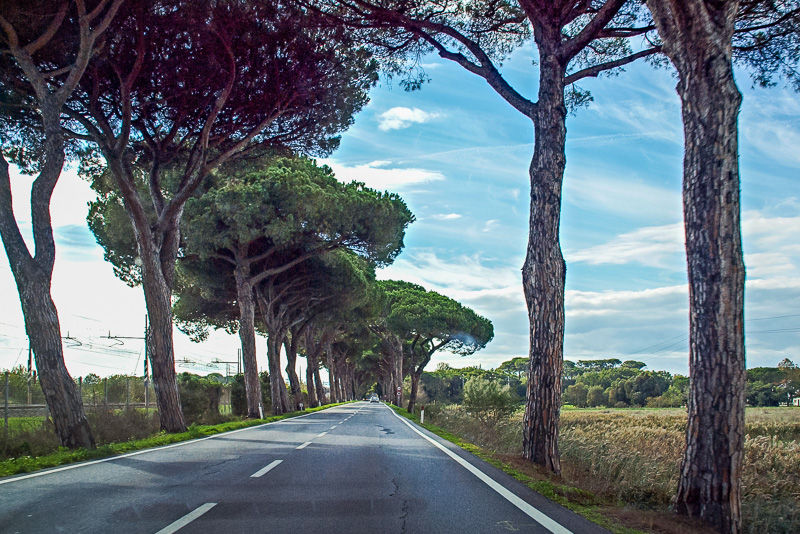
Italian Road
Photo: Finding Beyond
I have witnessed this phenomenon myself whilst on a road trip with my family! We were travelling from Rome, down to Naples on some countryside roads slightly off the beaten track where all of a sudden, we noticed a half naked black women stood on the roadside. As the women disappeared from our view, we questioned what we saw and wondered if we had actually saw it. A few minutes later we saw something similar again and were assured! Needless to say, these women were not endangering themselves in the countryside of their own choice. Below is a Safe For Work version of what we witnessed.

Trafficked Nigerian Woman
Photo: Lynsey Addario
Right, let's move back into history!
Before speaking on the Atlantic Slave Trade which was the conception of the Afro-Caribbean and Jamaican man, it may be worth mentioning that the Europeans did not bring the notion of slavery to Africa. In fact, the notion of African slavery was brought to the Europeans by other Africans. The procurement and sale of slaves were already old practices on the continent. Long before the Portuguese bought their first slave, Black Africans were already being kidnapped and sold by North Africans and Arabs.
The Indian Ocean Slave Trade
The Indian Ocean Slave Trade is reported to date back to 2500BC and was more multi-directional, and multi-racial than the Trans Atlantic Slave Trade. The demographics of the slaves exported were predominantly Black Africans from Mainland East Africa but there were also contributions from Asian nationalities such as the Indians, Japanese, and South East Asians.
Another key distinction between The Indian Ocean and Atlantic Slave Trade was that in the former, enslavement was mostly to fulfil services whereas in the latter, male slaves dominated those being shipped to the New World due to demand being spurred by the hard labour required to produce sugar, tobacco, coffee and other crops.
Most slaves were captured in the Lake Nyasa area of the Great Lakes region, the Bahr el Ghazal region, and in various areas of Ethiopia. Captees were then forced to walk long distances to the coast of East Africa before being shipped to Asian countries such as Turkey, India, Saudi Arabia, Yemen, Oman, Iraq and Iran.
These slaves were generally non-Muslims and were very rarely enslaved persons of Middle Eastern origin. Islamic law does not permit slavery but willing slavers ignored these rules and found leniency from the general population in the enslavement of non-Muslims.
The Indian Ocean Slave Trade would see a resurgence due to African colonialism and the Trans-Atlantic trade in the 19th century. Eastward slave traffic would again rise due to plantations on the islands of Madagascar, Mauritius, Pemba and Zanzibar demanding more labour. Significantly less well recorded than the Trans-Atlantic slave trade, it is loosely estimated that in the 19th century, traffic ranged from 3000-20,000 individuals per year.
Overall, The Indian Ocean slave trade is generally thought to have been of less magnitude than the Trans-Saharan Slave Trade that began before it.
The Trans-Saharan Slave Trade
The Trans-Saharan slave trade is believed to date back as far as 3000BC, during the reign of the Egyptians. It is evidenced in records from the days of the Roman Empire, which at the earliest would be the 8th century BC and at the latest would be the 5th century AD which portrays the great longevity of the trade.
It mostly involved the movement of Black Africans from Sub-Saharan African to North Africa, and very little in the opposite direction. An estimation from a report suggests that as many as 7.2 million black slaves may have crossed the Sahara from the 7th century to the 20th century. Once moved to North Africa, the slaves were sold to Mediterranean and Middle Eastern countries.

Slave Silhouettes - Working in the fields
Photo: Marco Varro
The Sub-Saharan and red sea region of the continent is believed to have been trading between 5-10,000 slaves per year between 800-1600 AD, long before the beginning of the Trans-Atlantic Slave Trade, and would continue to produce many slaves deep into the 20th century. It is estimated that 11-17 million black slaves were moved from Sub-Saharan Africa to the Muslim world.
Local African Slavery
Local African slavery is believed to have been far less harsh than that conducted by the Europeans and Islamic states. Within Sub-Saharan Africa, slaves were considered as part of the household of their owner and as such, enjoyed some rights.
Slaves were described by anthropologist M. McCulloch as living in houses close to the land that they laboured on for their masters. The enslaved were given plots of land for their own use and they could keep the spoils of anything gained from the use of said land. With the wealth acquired from these spoils, a slave could even become the owner of another slave.
Local African slaves also enjoyed some degree of social mobility. Slaves could marry into the households of their masters and McCullock describes an example in which a slave became a Chief whilst the heir of the Chiefdom was still a minor, a role akin to a Chief Regent or Viceroy. Unlike the aforementioned trades, slaves were not usually sold except for when they had committed a serious offense (such as adultery with the wife of a freeman) and the children of slaves were not automatically slaves also.
Some observers consider the term "slave" to be misleading when describing the local practice.
Whilst the many wars that took place were responsible for much of the capture and enslavement, Africans also became enslaved through non-military means. Judicial and religious sanctions and punishments removed alleged criminals, people accused of witchcraft, and social misfits through enslavement and banishment.
Rebellious family members risked being expelled from their homes through enslavement and children were commonly sold into slavery by their parents for various reasons, but usually because of debts. Those without children may find themselves enslaved instead until their had paid off what they owed.
A freeman heavily in debt, and facing the threat of the punishment or being sold, could approach a wealthier man or chief with a plea to pay off his debts "whilst sitting on his lap".
A freeman could also give a child or some other dependent of his "to be for you".
This meant that the pawned person was automatically reduced to a position of dependence, and if the pawn was never redeemed, he/she or his/her children eventually became part of the master's extended family. By this time, the children were practically indistinguishable from the real children of the master, since they grew up regarding one another as brothers or family.
Some observers consider the term "slave" to be misleading when describing the local practice. and regard the nouns subject, servant, client, serf, pawn, dependent, or retainer" to be more accurate. But ultimately, though their treatment was better, these were still people that had their liberties suspended.
The Wrap Up!
In summary, slavery is an ancient practice and is known to have been prevalent on the continent of Africa from at least around 3000BC in the form of the Trans-Saharan Slave Trade which involved the movement of Black Africans from Sub-Saharan African to North Africa, and little in the opposite direction. This was mostly perpetrated by North Africans, who would then sell their slaves to Mediterranean and Middle Eastern countries.
Trans-Saharan Slave Trade was succeeded by and continued alongside the Indian Ocean Slave Trade which involved the enslavement and trade of mostly Sub-Saharan Africans, but was much more multi-directional, and multi-racial than the preceding Trans-Saharan and Trans-Atlantic Slave Trade.
It is unclear when the practice of Local African Slavery began or where it originated from, but it is believed to have been much less harsh than that of all the other kinds of slavery on the continent which would be best categorized as chattel slavery. In local African Slavery, the slave retained a limited amount of rights and retained some degree of social mobility.
Trans-Saharan Slave Trade still remains to this day, with desperate migrants falling into the hands of modern-day traffickers that extort and imprison those trying to leave Africa in northern countries such as Libya and Mauritania, where their passage may indebt them to unscrupulous people and organisations who seek to profit from their exploitation.
That's all for now! Join us again in the next article where we will begin talking about the Trans-Atlantic Slave Trade.


Comments